
Why arrive through Pucallpa?
Pucallpa connects your journey in Peru with our part of the Amazon. It is where we coordinate your arrival and meeting arrangements before onward travel to Santa Rosa de Dinamarca. The retreat itself is in the community, outside the city.
Give yourself time to arrive before pickup and to agree the return journey. Our getting-here guide explains what to confirm before buying your final connections.
A living home of Shipibo plant tradition
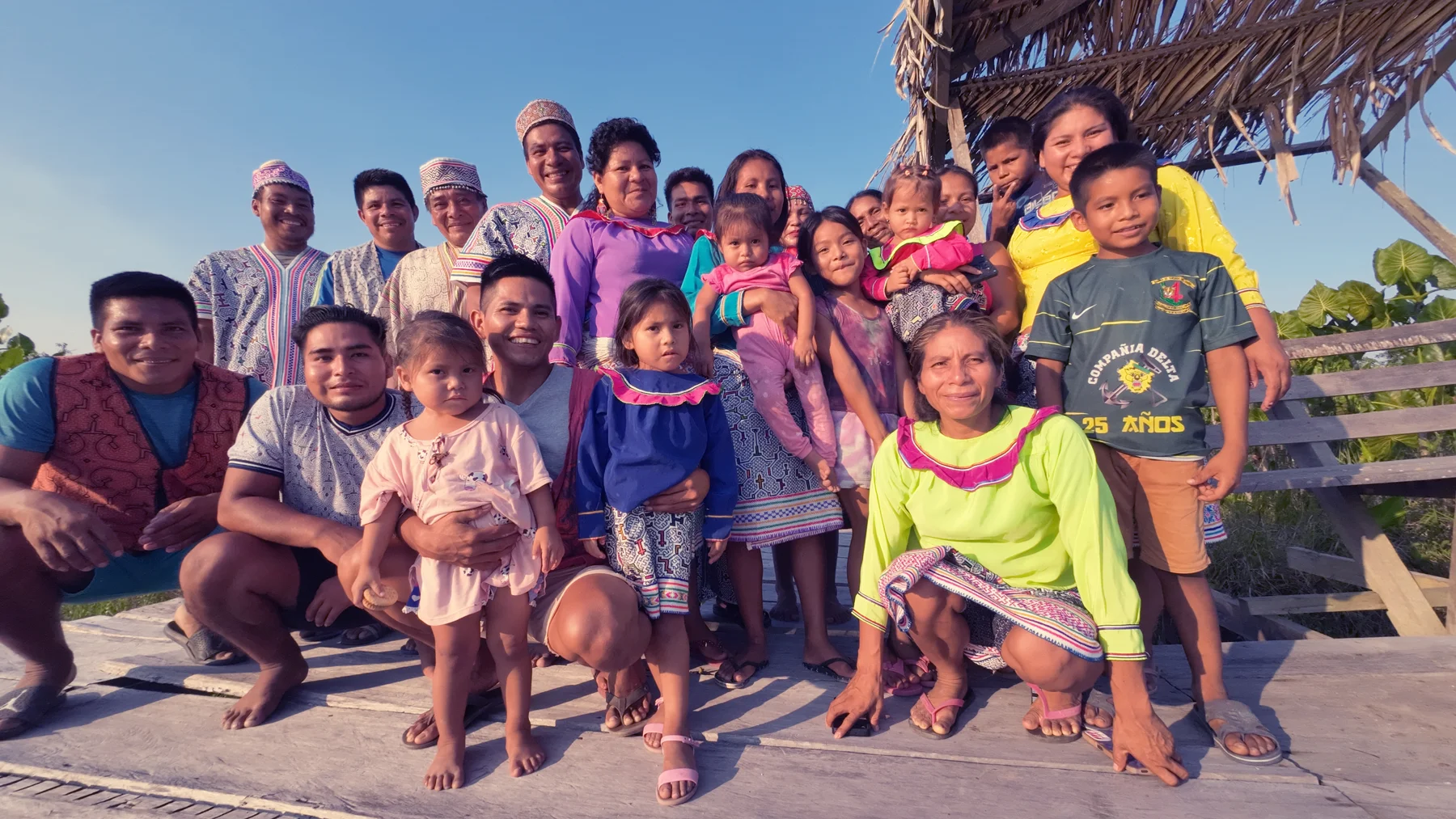
Santa Rosa de Dinamarca is a community where Shipibo ceremonial knowledge is carried by specific families and practitioners. The presence of 57 shamans among 532 residents, according to our team’s January 2026 community figures, gives a sense of the place this practice holds in local life.
This is the setting in which our maestros live, learn and understand their responsibilities. A visit offers the opportunity to encounter that tradition through its people and the arrangements you have agreed with them. Ask before photographing community members, homes or ceremonies.
Know Diomar and Antonio before you come
Diomar López Silvano connects his practice with his family’s rama lineage, his father Roger López Maynas and relationships with more than fifty plants. Alongside his work as a maestro and foundation chairman, he serves as mayor of Santa Rosa de Dinamarca.
Antonio Vasquez Galaretta brings a history of more than forty years of practice and over a decade of learning with Guillermo Arévalo. His extended dietas and teaching relationships connect several generations of practitioners.
Their histories explain the tradition behind the retreat. Your booking conversation confirms which named maestros and support staff will accompany your own stay.
A ceremony-focused retreat in Ucayali
If you are choosing between Pucallpa and Iquitos, begin with the people and the kind of stay you want. Both are gateways to the Peruvian Amazon, and practices differ between individual centres. Our retreat is organised around ceremony, rest, live icaros and personal guidance in a Shipibo community.
The time between ceremonies matters. It gives you space to reflect, speak with your guides and explore your relationship with yourself and the natural world. Within the maestros’ spiritual tradition, this also means learning about connection with the world of plants. Your itinerary centres on this work rather than a sightseeing programme.
Plants, dieta and a relationship with place
Our shamans cultivate plants or gather them from the rainforest. The Ayahuasca vines used in ceremony have grown for at least ten years. Ask your guides about their plant knowledge and how they understand the role of dieta and icaros.
Piñón Negro cleansing is included in all three short retreats. Piñón Blanco dieta is a separate practice and is part of our longer Shipibo shaman apprenticeship. The distinction helps you choose the kind of visit you are seeking.
Choose your way of participating
Come for a Sacred Private retreat for one, a Personal retreat for up to two guests or a scheduled small-group stay. If you prefer not to drink ayahuasca, you can follow the same arrangements and attend for the icaros.
Choose a visit with room for preparation and conversation. Read about health disclosure and personal boundaries, and ask the team about the practical support available.